

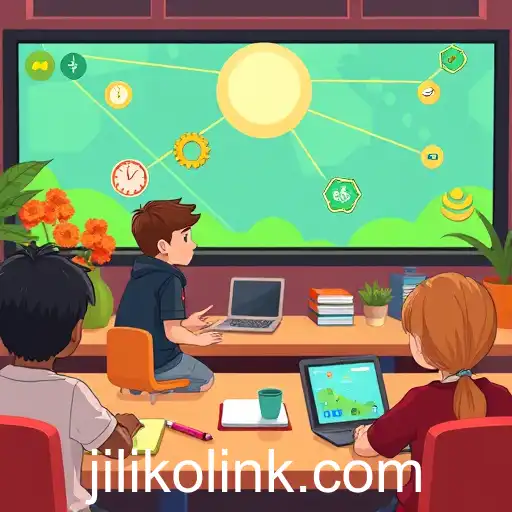

In the ever-evolving landscape of education, the integration of technology plays a pivotal role in shaping the future of learning. Among the various technological innovations, educational games have emerged as a dynamic tool, bridging the gap between entertainment and education. This burgeoning category of games not only captivates the minds of young learners but also enhances their academic skills in a playful and engaging manner.
Educational games are designed with a dual purpose: to entertain and to educate. They foster an immersive learning environment where players can develop critical thinking, problem-solving skills, and subject-specific knowledge while having fun. The interactive nature of these games ensures that players remain engaged, making the learning process more effective and less monotonous than traditional methods.
Platforms like 'Jiliko Link' have become instrumental in advancing this trend, offering a plethora of games that cater to a wide range of educational needs and preferences. From basic arithmetic to complex scientific principles, the games available on these platforms cover a broad spectrum of subjects, accommodating learners of all ages and levels.
The impact of educational games extends beyond mere academics. They also help in honing soft skills such as teamwork, communication, and leadership. Many games encourage collaborative play, requiring players to work together to solve puzzles and achieve common goals, thereby preparing them for real-world scenarios.
Furthermore, educational games are increasingly incorporating adaptive learning technologies. These technologies personalize the gaming experience by analyzing a player's performance and adjusting the difficulty level accordingly. This ensures that learners are continuously challenged and can progress at their own pace, enhancing the overall efficacy of the learning process.
One of the significant benefits of educational games is their ability to reach a wider audience. With the advent of smartphones and tablets, access to educational games has become more convenient and widespread. This accessibility democratizes education, enabling learners from different geographical and socio-economic backgrounds to access quality educational resources anytime and anywhere.
However, the integration of games into education is not without its challenges. Concerns about screen time, content appropriateness, and the potential for gaming addiction are prevalent among educators and parents. Therefore, it is crucial for developers to create content that is not only educationally rich but also balanced in terms of gameplay time and cognitive load.
In conclusion, educational games represent a growing category within the digital learning realm, with platforms like 'Jiliko Link' paving the way for innovative and engaging educational experiences. As this trend continues to evolve, it holds the promise of making learning not just a necessity, but an enjoyable and lifelong pursuit.

Exploring the latest trends in digital gaming platforms and their impact on the global gaming community.

Explore how gaming platforms, like the emerging 'jiliko link', are transforming the entertainment landscape in 2025.

Exploring the evolution of online gaming communities and the increasing popularity of platforms in 2025.

An exploration of Jiliko's rising prominence in the online gaming world against the backdrop of the digital revolution.

Exploring Jiliko's role in shaping the online gaming landscape amidst emerging trends and technologies.

Exploring the evolution, challenges, and future of online gaming platforms in 2025.
